

 Haber akışına dön
News Centre
Siyaset·
It İs Not A Mere Hiccup, But The Regime İtself
Kaynak:

The Kadıköy Branch of the Foundation for Social Research, Culture and the Arts (TAKSAV) organised a discussion entitled ‘Why did it explode? Who won, who lost? From a fund crisis to a regime crisis’, featuring journalists Timur Soykan and Bahadır Özgür as speakers.
In the discussion, which addressed the investigations into the funds and the political dimensions of the crisis, Timur Soykan was the first to speak, describing the events as “the biggest scandal in the history of the Republic of Turkey”.
Noting that what sets this scandal apart from previous cases of corruption is the trap set for small investors, Soykan said:
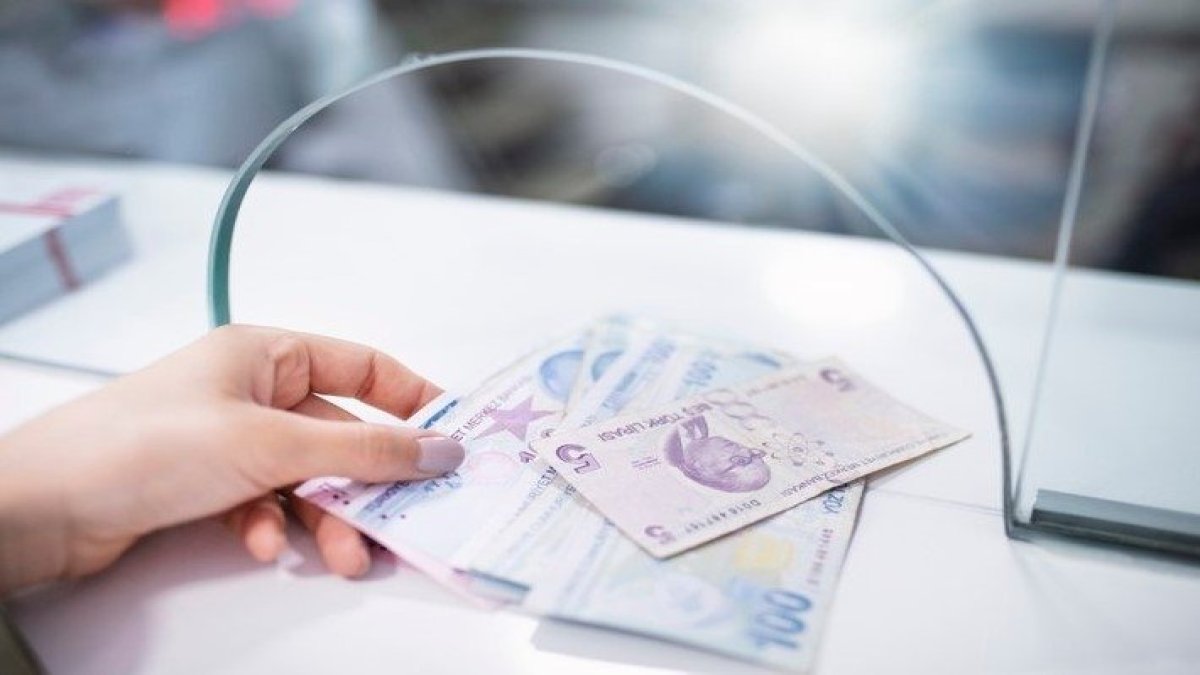
“Previously, they were stealing the resources the people had earned through their hard work from all of us via tenders and bribes. This time, they lured specific individuals into a trap. Politicians, bureaucrats and gang members posing as ‘businesspeople’—who have embedded themselves within the AKP’s inner circle—jointly plundered the small investors’ money. We are talking about a heist worth 20 billion dollars, and the total damage inflicted on the stock market far exceeds the damage caused by the 6 February earthquakes. To avoid being held to account for this, they are systematically imprisoning journalists, shutting down T24, appointing a trustee to Halk TV, and blocking access to nearly 2,000 accounts.”
STATE PROJECT
Emphasising that the regime of corruption has crossed a new threshold, Soykan said, “In the past, they had set up mechanisms to cover their tracks, as the saying goes, ‘Is there such a thing as proof of a bribe?’ This time, they didn’t care; all the evidence remains at the Istanbul Stock Exchange, the Capital Markets Board and the Central Securities Depository. They thought it wouldn’t be exposed because they carried out this heist through state channels and the records were in their own hands,” he said.
Soykan stated that the regime’s first strategy was the question “How much can we cover up?”, whilst the second was to keep Erdoğan out of the picture, adding, “At this point, they created a completely hollow narrative claiming, ‘Erdoğan is furious; he won’t spare anyone.’ They are trying to prevent the revelation that the regime’s defining characteristic is a system of plunder, because this would spell their downfall,” he stated.
Noting that the structure we are facing is a “state project”, Soykan listed examples: “It has long been discussed that Tera is linked to the Palace and the AKP, and that the inflated valuations reaching 16,000 per cent can only be explained by this regime. Anadolu Agency and Sabah promoted Emre Tezmen and Tera, whilst a massive network of trolls on social media attacked anyone who criticised these funds. Ramazan Başak, former Deputy Chairman of MASAK, was detained for his statements regarding the share price inflation at Tera. Although the indictment against Kazım Garipoğlu detailed the processes through which illegal betting funds were channelled to Tera, no investigation was conducted into this matter. Despite Mehmet Şimşek’s statement in November 2025 that they were aware of the manipulation of these funds, the scam continued right up to its peak. Meanwhile, the Banking Regulation and Supervision Agency (BDDK) granted banking licences to companies that were clearly set to carry out such scams.”
WHERE DID IT GO?
Soykan, who claimed the investigation was being conducted to cover things up, said:
“Justice Minister Akın Gürlek announced that 440 people had carried out a fraud totalling 401 billion lira between 1 and 16 September. Only 2 billion lira of this belonged to Fatma Betül Sayan Kaya, yet they are even protecting her. Erdin Özel, Chairman of the Board of Directors at Tera Portföy, was initially released with only a travel ban; they aren’t even asking him about Sayan Kaya, with whom he worked at the AKP Headquarters. They said, ‘We will publish a list of 141 people’, but only 85 names were revealed. You cannot get an answer regarding the fate of the remaining 56 people. They still haven’t disclosed the list of 440 people. Sayan Kaya, Hayati Yazıcı, Nihat Zeybekci – all of them are figures who sat at the same table as Erdoğan at the AKP headquarters, and no one is asking about the source of this money.”
Noting that the embezzlement is also one of the world’s largest money-laundering operations, Soykan emphasised that what needs to be done is to expose the nature of the regime, keep the issue on the agenda and forge a united front with all sections of the opposition, stating: “Turkey stands on the brink of a critical process over the next 1.5 years that will determine the next 100 years.”
WHO BROUGHT IT TO LIGHT?
Bahadır Özgür, the second speaker in the discussion, began his remarks with the question: “If neither we nor the opposition brought this scandal to light, how did it come to light?” Noting that the role of the financial system in regime-building had not been sufficiently discussed, Özgür recalled that every change in the financial system—from the Kastelli and Banker Bako scandals to the bank robberies of the 1990s—had been accompanied by a change in regime.
Noting that during the AKP era, the regime’s financing had passed through stages ranging from the Istanbul Metropolitan Municipality to public tenders and on to money laundering, Özgür described the period after 2023 as follows: “In 2023, four or five portfolio companies were established. As these were far removed from our daily lives, we were unable to monitor them closely. Initial public offerings were organised. New bureaucrats were appointed to the Capital Markets Board (SPK), the Banking Regulation and Supervision Agency (BDDK), the Central Bank, the management of the Istanbul Stock Exchange, and Takasbank – and all these bureaucrats are interconnected. In other words, a system was established – a very large system – and after 2023, they began to run the machine using these funds. Generating money from there and distributing it through these funds and their partners has reached immense proportions over the past two years. This is not the result of corruption setting in somewhere, nor is it an accident. It is not the result of people operating outside the rules; this was, in fact, the system itself. It was working perfectly; a great deal of money was being generated and distributed. Because there was so much money, the operation grew, and an oligarchy of stockbrokers, bureaucrats and politicians emerged. The financial system fell into their hands; even the banks could not speak out. The entire financial system was built upon their operations, and the whole thing imploded.”
Following the seizure of electronic payment institutions and companies in the Grand Bazaar and Laleli, Özgür asked where this money had gone, stating, “The financial system in Turkey is fuelled by dirty money.”
Noting that the Turkish people have resisted changes in political direction in every era, Özgür recalled that following the 1 May massacre in 1977, the public turned to the CHP, and in 1989 to the SHP. Özgür said that in 2024, the year with the most elections worldwide, the only surprise came from the local elections in Turkey, and concluded his speech as follows:
“To put it simply, Tera is a regime crisis within the financial system. The regime’s financial resources have now become unsustainable in the global economic climate. A warning came from the US: ‘If you can’t sort this out, I’ll blow you up’; they said, ‘You sort this out’. Once those words were spoken, the whole thing blew up. Now we’re left with the wreckage. Clearing up this wreckage and uncovering the political connections is no easy task. Organising a social struggle against this is also no easy task, because it’s very much an internal regime issue. But because it has victimised so many people, they’re arresting this person and that person; they’re trying to muddle through with a bit of chaos until they find a solution that suits them.”
PRESSURE INCREASES AS LONG AS WE CAN’T GENERATE CONSENT
Seyhan Erdoğdu, İbrahim Varlı, Galip Yalman and Hayri Kozanoğlu took part in the event ‘Discussions on Directions, Trends and Paths in the New World’, held at TAKSAV in Ankara.
Speaking at the event under the heading “Social Opposition, Resistance and Reconstruction”, Galip Yalman emphasised that, to the extent that capitalism fails to create alternatives, it perpetuates neoliberalism through new mechanisms. Stating that the current process must be thoroughly analysed, Yalman said, “We have, in fact, been living under an authoritarian form of state since 1980. Under these conditions, where the world of labour is under pressure, regulations are being implemented in favour of capital, yet there are various conflicts of interest amongst different sectors of capital, we must focus on how a united opposition struggle can be waged and on what minimum common ground we can find,” he said.
Hayri Kozanoğlu, meanwhile, noting that capitalism is in the midst of a global and structural crisis, argued that the left must build its basis for struggle around the axes of class exploitation, imperialism, the ecological crisis and democracy. Kozanoğlu said that as income distribution deteriorates, a lack of demand arises; as the public sector weakens, recourse is made to imperialist interventions; and when consent cannot be generated, repressive regimes come to the fore.
FUNDING CRISIS CAUSED VOTE LOSS
Former AKP MP Şamil Tayyar made a striking claim regarding the impact of the funding crisis on his party’s vote share. Tayyar stated that a private poll, which he claimed had been submitted to the Presidential Palace, indicated that the AKP had lost around 6 per cent of the vote. Similar claims were reflected in other polls as well.
Note: This article is translated from the original article titled Yol kazası değil rejimin kendisi, published in BirGün newspaper on October 19, 2026.
Okumaya devam et