

 Haber akışına dön
Halis Dokgöz’s book offers a rewarding read not only for readers interested in forensic science but also for those who care about the relationship between science and society. The truth is often hidden in details that go unnoticed; however, achieving justice with those details requires not only finding the clues but also interpreting them with scientific rigor and taking responsibility for human life.
Gündem·
Silent Witnesses To The Truth: The Trace İn Contact, The Devil İn The Details
Kaynak:
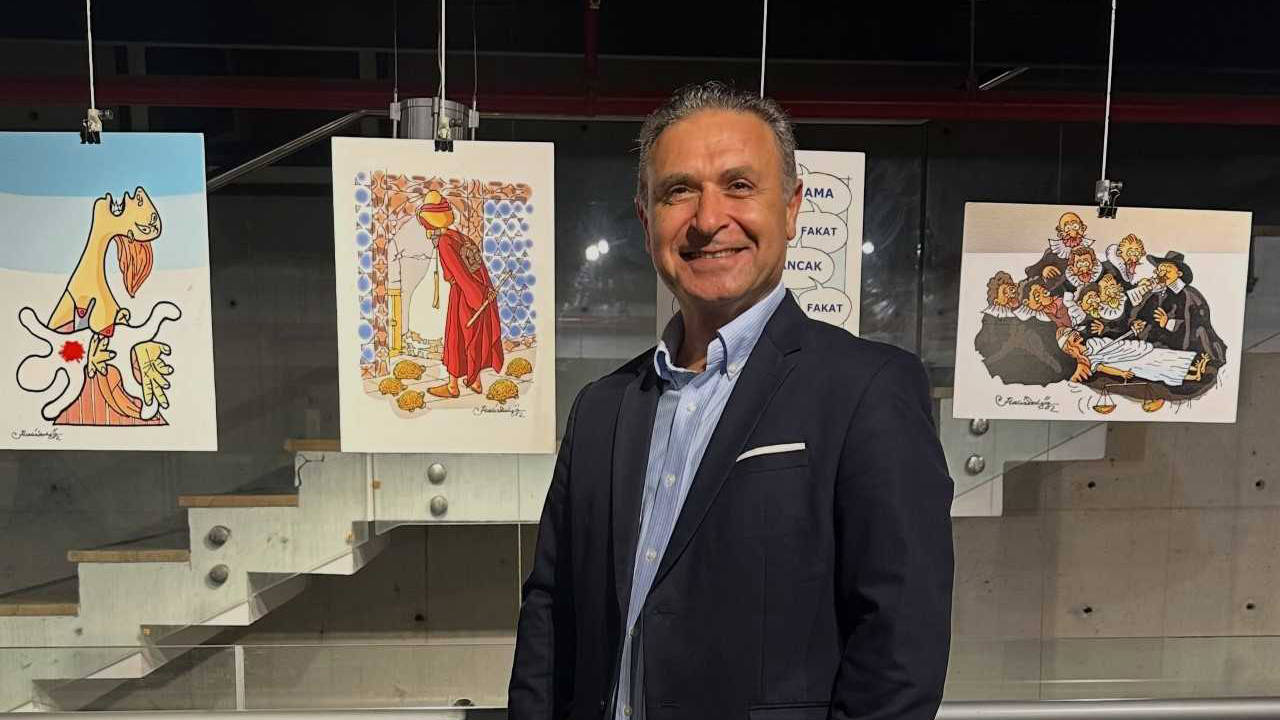
You may remember Halis Dokgöz from his Metafor column in BirGün newspaper, where he drew cartoons, or from his television appearances as a scientist. Prof. Dr. Halis Dokgöz, a faculty member in the Department of Forensic Medicine at Mersin University’s Faculty of Medicine, recently published his new book, The Trace in Contact, the Devil in the Details, under the A7 Kitap imprint.
Does a murder leave behind only a body? But what if there is no body? Do the objects a person touches, the ground they walk on, the fears they carry, and the secrets they try to hide come to life and begin to speak after they’re gone? In his new book, Halis expands the boundaries of forensic science by exploring these questions; he invites us to reflect not only on how a crime is solved, but also on how the truth is established.
Halis’s central argument is that forensic science is by no means a field of expertise that can be confined to laboratories, autopsy tables, and courtrooms. While crime is an individual matter, it also involves social relationships, cultural codes, psychological conditions, and institutional responsibilities. Therefore, pursuing physical evidence does not justify ignoring the incident's social context.
FROM TRACES TO THE TRUTH
Edmond Locard’s exchange principle forms the intellectual backbone of the book: Every contact leaves a trace. A strand of hair, a drop of blood, a fiber, a trace of DNA, or a microscopic particle on an object can help reconstruct the incident when examined with the right methods. John George Haigh’s belief that he could conceal his murders by dissolving the bodies in acid is one of the striking examples of this approach. The discovery of evidence, including human remains as well as dental prostheses and gallstones, brings a crime that was meant to remain hidden back into the light.
Through these narratives, Halis not only introduces readers to the astonishing techniques of forensic science but also prompts them to question the idea of the “perfect crime.” What the perpetrator believes they have destroyed may continue to exist in another form. But physical evidence does not speak for itself. First and foremost, investigators must collect, preserve, analyze, and interpret samples.
DR. EDMOND LOCARD AND DR. PAUL LELAND KIRK
Biochemist and criminologist Paul Leland Kirk says the following about the “traces” mentioned in Locard’s exchange principle: “Human witnesses may disappear, but this evidence does not. This is real evidence. Physical evidence cannot be wrong, cannot perjure itself, and cannot keep a secret. Only human failure to find, examine, and interpret it can diminish its value.” However, finding a trace is not the same as determining what it signifies. Indeed, in the section on bloodstain pattern analysis, Halis emphasizes the importance of avoiding premature conclusions and evaluating findings together. This distinction is crucial to the book’s scientific credibility. Science is not merely about making the invisible visible; it is also about knowing what the visible proves, and what it does not.
WHERE SCIENCE AND IMAGINATION MEET
As in his previous book, The Perfect Murder, Halis again brings together forensic science with literature, cinema, mythology, and philosophy. He transforms Mary Shelley’s Frankenstein, Dostoyevsky’s Crime and Punishment, Agatha Christie’s detective fiction, and the Sherlock Holmes stories into tools for discussing scientific topics. The chapter titles he has chosen, drawn from different eras, disciplines, and examples of popular culture, keep the reader’s curiosity alive. In particular, each chapter opens with a different case or cultural reference, allowing readers to engage in the discussion without needing specialized knowledge.
The connection to Frankenstein marks a point where the book transcends mere curiosity about crime fiction. Victor Frankenstein’s abandonment of the creature he created prompts reflection on how a scientific achievement can turn into a catastrophe when it is not accompanied by moral responsibility. The thread stretching from galvanism experiments to modern biotechnology brings to the forefront the ethical questions raised by scientific progress. For creation is not merely about achieving what is technically possible; it is about assuming responsibility for the resulting entity and its consequences.
I’d like to add a film to the selection in the section on hypothermia: Journey of Hope. Directed by Xavier Koller, Journey of Hope, which won the Oscar for Best Foreign Language Film in 1991 as a Swiss production, tells the story of Haydar and Meryem, who lose their children to hypothermia at the border while attempting to enter Switzerland illegally from a village in Maraş. The film’s screenplay was inspired by Nihat Behram’s Gurbet, which was translated into French in 1984 and registered as a film project with the Société des Auteurs et Compositeurs Dramatiques (Society of Dramatic Authors and Composers).
Ünal Gümüş acquired the film rights to Gurbet, began searching for a director, and gave the screenplay to Koller in 1988. In the court case that ensued, Koller denied Behram’s accusation of plagiarism, claiming that he had written the screenplay based on news reports.
THE SOCIETY BEHIND CRIME
A significant section of the book goes beyond individual crimes to focus on societal responsibility. Chapters on children driven to crime, missing children, domestic violence, child homicides, and animal rights demonstrate that forensic medicine is not merely an activity that begins after death. The question here is under what conditions an act of violence becomes possible. Halis’s discussion, illustrated with examples from literature and cinema, reminds us that juvenile delinquency cannot be reduced to individual will alone. References to incidents that have left a deep mark on the national public consciousness, such as the Palu Family case and the murder of Narin Güran, strengthen the book’s connection to social reality. In this context, the book’s most powerful social message is that solving a crime is not an individual success story. Justice is not limited to finding the perpetrator; it also involves understanding the causes of preventable violence and creating the conditions to prevent its recurrence.
Rather than providing ready-made answers, The Trace in Contact, the Devil in the Details prompts the reader to ask questions. It presents forensic medicine not merely as a technical tool for solving murders, but as part of a broader effort to understand both the individual and society.
The “trace” in the book’s title is not simply a physical remnant left at a crime scene; it is also an invitation to reflect on what human behavior, negligence, violence, and evasion of responsibility leave in their wake.
EXHIBITION
The cartoon exhibition, which opened alongside Halis’s book and shares the same title, holds special significance for bringing forensic medicine and forensic science into dialogue with the critical language of the visual arts. The 50 cartoons in the exhibition shed light on the social realities behind criminal incidents while also questioning violence against children, women, the elderly, people with disabilities, animals, and plants. By combining his cartooning, a craft he has practiced since 1985, with his scientific expertise, Halis approaches the principle that “Every contact leaves a trace” not merely as a forensic finding but as a powerful idea that calls for social responsibility. Thus, the book and the exhibition open a discussion of the same issue through two distinct narrative languages: one through scientific and intellectual analysis, the other through the striking, critical power of the drawing.
May the book have many readers, and the exhibition many visitors...
Okumaya devam et