

 Haber akışına dön
Politics Service
Siyaset·
There İs Strong Opposition To The Political Deadlock
Kaynak:

As the country is subjected to ever-increasing economic hardship, injustice, lawlessness, oppression, and a reactionary siege, politics has reached an impasse. The people, relegated to the role of spectators by the prevailing mindset and confined to the stands, cannot become the true subjects of politics.
The Palace administration, which is blocking the channels of politics, is imposing a form of politics devoid of the people upon the country. The need for a system in which mechanisms of authority and decision-making function, and where the people move from the stands onto the stage, is growing ever more urgent.
The October survey report conducted by the SAMER Field Research Centre also revealed that dissatisfaction with political decision-making processes is steadily increasing. According to the data from the report, titled “Citizens’ Perception of Politics, the Search for Alternative Politics and Opportunities for Democratic Participation”, whilst citizens believe it is possible to participate in politics outside of elections, they are dissatisfied with the current form of political decision-making.
Some key findings from the survey are as follows:
• 45.1 % of respondents stated they were dissatisfied with the way political decisions are made, whilst 33.9 % said they were completely dissatisfied. Thus, the combined total of these two negative responses reaches 79 %. The total proportion of those stating they were satisfied or very satisfied with the way political decisions are made stands at just 6 %.
• 77.3 % of participants stated that they “strongly agree” that the views of local residents should be directly sought when making important decisions concerning their neighbourhood or city.
• 39.7 % of participants stated that there are “many” avenues for political participation other than elections, whilst 33.4 % stated that, whilst such avenues do exist, they are “limited”.
• Whilst millions took to the streets in many European cities, a critical question was also posed regarding peaceful demonstrations and marches. Among the methods available to those wishing to voice their views on a social or local issue, participating in a peaceful demonstration or march ranked first at 36.2 %. This was followed by joining a civil society organisation at 26.2 %.
• The total proportion of those who consider it necessary or very necessary for decisions on neighbourhood and local issues to be taken directly in people’s assemblies stood at 84.1 %.
SEARCHING FOR A CHANNEL FOR PROTEST
SAMER Field Coordinator Yüksel Genç:
It is a widely accepted fact that the representative politics which has persisted in Turkey for a long time has proved inadequate in resolving the fundamental problems of society and is experiencing a deep impasse. Citizens are not merely dissatisfied with the current political system; they also know that an alternative, participation-focused form of politics is possible and wish to be part of it. Unfortunately, however, this desire hits a wall of deep anxiety and pressure before it can be translated into practical action.
Research data clearly shows that nearly half of society is dissatisfied with current forms of political decision-making, whilst the proportion of those dissatisfied with the decisions taken has risen to over 70 %.
Traditional representative arenas, seen as merely a matter of casting a vote, are no longer perceived by citizens as a source of solutions.
Nevertheless, society is aware of the existence of political channels beyond the ballot box. Provided that citizen assemblies emerging from the local level, direct participation mechanisms, and transparent decision-making processes are established, there is a strong motivation amongst the public to take part in these mechanisms and shape politics. In other words, what we have here is not a passive mass that has completely lost hope in politics, but a dynamic social fabric that yearns for a more democratic form of political engagement.
It is precisely at this point that the greatest obstacle to democratic transformation emerges: the gap between desire and opportunity or action. Whilst society wishes to be an active participant through local mechanisms, the moment it steps into this arena, it is overcome by a sense of insecurity. Restrictions on rights and freedoms, along with pressures on freedom of expression and organisation, are forcing citizens to retreat even from engaging in politics in their daily lives. This situation leads one in five citizens to lose all faith in politics’ capacity to solve problems. Whilst society desires political change on the one hand, on the other it is forced to “suppress” and push back this desire due to existing repressive factors.
The narrowing of spaces for political participation also brings with it a serious contradiction. Citizens who cannot find channels for participation, or who are anxious about entering such channels, find themselves forced to resort to the traditional methods they are familiar with, even though they are dissatisfied. Joining a political party or attempting to reach out to MPs and mayors remains the predominant tendency when seeking to resolve issues. The idea of engaging in effective politics through organised civil society, however, has not yet attained the level of trust it deserves amongst the general public.
Nor is this situation unique to Turkey. The rising trends of right-wing politics, security-driven structures, and authoritarianism across the globe are weakening citizens’ agency in politics on a global scale. In this system, where politics reinforces itself by generating crises at a global level, the social reactions reflected on the streets in France or various cities across Europe serve as protests against the gridlocked political system and the narrowing of rights.
THE PEOPLE MUST BE THE SUBJECT OF POLITICS
Assoc. Prof. Dr. Ismet Akça:
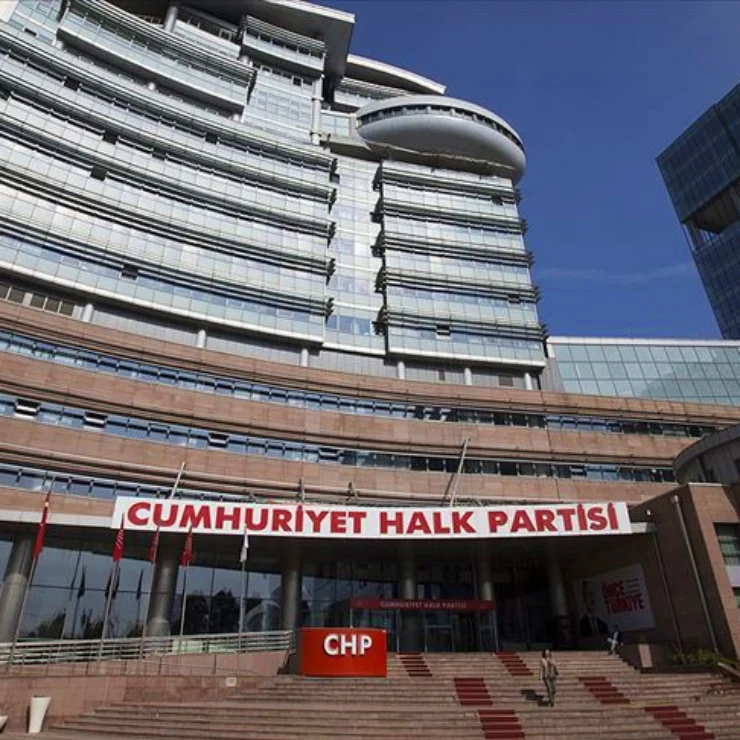
The current regime in Turkey – the so-called “palace regime” – has, in fact, severely undermined the elections through its latest attacks. The political siege that began on 19 March – and in particular the siege targeting the main opposition, culminating in measures such as the seizure of local councils – has clearly demonstrated that the will of the electorate, the results reflected at the ballot box, and the will expressed in the elections will not be recognised at the whim of those in power.
Against this backdrop, alongside many people who view the world from a more left-wing perspective and understand these dynamics, we were discussing at length the 2013 Gezi protests and the period following the 7 June 2015 elections. In my view, this period also marks the starting point of the new regime and the new state that are currently being constructed.
From these processes onwards, in order to give meaning to the elections in the face of this new regime being built in Turkey, we emphasised that the opposition must first mobilise, engage in politics beyond election day and the election period, and organise itself.
The point we have reached shows that this was inevitable. However, unfortunately, the main opposition party… Let us recall: following 7 June 2015, for example, during the 2016 vote to lift the parliamentary immunity of the HDP’s co-chairs and MPs, and subsequently during the process of counting unstamped ballots in the referendum on the transition to the “Turkish-style presidential system”, what was done was: remaining silent in the face of all these moves that undermined the ballot box, the will of the electorate, and the most fundamental political right – the right to vote and to stand for election – and moving forward by pointing to the next ballot box each time. Yet, what we have experienced since 19 March 2025 has shown that we have reached a point where the will of the electorate, the ballot box, and the right to vote and to stand for election have now been completely eradicated.
Today, the main opposition party is once again adopting a similar stance. Let us recall that, in the run-up to the 2023 election, Kılıçdaroğlu said, “For goodness’ sake, stay off the streets; wait for polling day.” Today, unfortunately, Özgür Özel is saying similar things. Yet, in order to make the ballot box and elections a safe, meaningful, and valid mechanism for political participation, the public must be able to organise in advance and be in a position to defend their most fundamental civic and political rights. For this reason, it does not appear possible today for representative democracy to function healthily through electoral participation without first establishing the foundations where the public can organise in advance, participate in the process, and become direct agents of politics.
THE STREET HAS BEEN CRIMINALISED
Assoc. Prof. Dr Samim Akgönül
Since 2013 – that is, following the Gezi protests – the criminalisation of the street in Turkey has been completed. There were several key targets in this criminalisation of the streets: firstly, young people; from the Gezi protests onwards, barriers were erected to prevent young people from taking to the streets. Secondly, the Kurds; we know this all too well from the events following 2015. Thirdly, the social democrats, in the process stretching from Saraçhane to the 2023 demonstrations.
In all three cases, the streets were criminalised against young people, Kurds, and social democrats; in other words, the streets have now been stripped of their status as a political actor in Turkey.
I might even add this: the basis for the approach of “Not in Taksim Square; go and hold your demonstrations in the areas built on reclaimed land” is also this. The aim is to prevent the street—that is, the lived-in, everyday space we walk through—from being a political actor; to push it outside the city and our lives. When this happens, the prevailing mindset naturally becomes: “Those elected have the right to do anything; once elected, they can do whatever they please.” Yet the street is a responsible political actor that monitors, complains, and makes demands.
When we remove the street from this equation, only the elected remain. When others are appointed in place of the elected—that is, when it is said, “We do not accept your choice; the one I want will govern”—I leave it to your judgement to decide what sort of democracy this is.
In France, too, of course, there are those who go on a rampage. We have a concept known as “fin de cortège” (the end of the procession) or “début de cortège” (the start of the procession). Many of the images you see in the media do not take place during the demonstration itself, but rather immediately before or after it. These incidents do not occur during the demonstrations themselves, where a million people are marching. Of course, such marginal incidents do occur; however, the street in France remains a vibrant actor in politics. In Turkey, on the other hand, the street has been pushed to the margins of political life. I believe this is a very опас dangerous situation. Because when demands expressed on the street are taken into account by politicians and translated into decisions, this has always contributed to a country’s progress. The complete elimination of this – that is, the severe restriction of political demands, the press, satire, and the right to demonstrate – poses a major threat. If channels of expression are closed off, how will you find out what the people want, or understand what is necessary? This situation poses a major political danger.
In France, a protest marches past my window every week; I even take part in some of them. The street in France—compared to other countries you may be familiar with—remains a powerful political actor. For example, the main reason such incidents make the news in BirGün or the US media is that images of those minor acts of violence are broadcast to the world. Otherwise, people in France are always out on the streets; the street is a genuine force.
However, there is a second, more context-specific reason: we are entering a period that could be described as “Fin de règne” (the twilight of a reign or regime). There is an election in six months’ time, and Macron will not be standing as a candidate. Consequently, there is currently a power vacuum, and the election campaign has already begun with these demonstrations. We are, in the truest sense, at the start of an election campaign, and the streets want to play a part in this process; indeed, they will.
It is also important to bear in mind that, according to figures from the Ministry of the Interior, 550,000 demonstrators took to the streets, whilst trade unions put the figure at 800,000–1 million. Of these, approximately 500 people are currently in police custody. There have been around 1,800 arrests, whilst 500 remain in police custody. This represents a minuscule proportion – just 0.01 % – of the demonstrators.
We cannot overlook the phenomenon known as “convergence des luttes” (the convergence of struggles). High school pupils are involved — in France, high schools also have trade unions, and from the age of 16, pupils are political actors in their own right. Every section of society is on the streets, from high school and university students to workers, the unemployed, pensioners, and the middle class.
This is because over the last 10 yr — that is, during Macron’s two terms in office — the concept of the welfare state, which had been held in high regard in France — that welfare state which had been gradually shrinking since the Jacques Chirac era — has now shrunk considerably. As a result, walls cannot be painted in secondary schools, toilets cannot be cleaned in universities, and social security covers the cost of fewer and fewer medicines with each passing month.
Consequently, there is pent-up anger across every social class. September and October mark the start of the social protest season in France, as the trade union calendar and budget negotiations coincide during these months.
The result is this: between 800,000 and 1 million people pour onto the streets; amongst them, 1,000 people cause destruction. It is those 1,000 people who make the news because they are causing damage; and because they make the news, the legitimate demands of the remaining 800,000–1 million people are ignored.
Both the right and the far right, as well as the state apparatus, exploit and instrumentalise this situation very effectively. This is because the actions of those 1,000 people act as a smokescreen, obscuring the community’s core demands. This is a tactic frequently and skilfully employed in right-wing and populist regimes.
Next week, secondary schools will begin the Toussaint holidays (a two-week break); universities, meanwhile, have a one-week holiday starting a week later. The real test will come after the holidays, specifically between 31 October and 1 November. We will see then whether street demonstrations resume when secondary schools and universities return from their holidays. However, it is certain that the streets will be one of the key players in this election. In fact, I am fairly certain that after the election — particularly if Le Pen is elected — the streets will become much more active and will be in a state of turmoil.
Note: This article is translated from the original article titled Tıkanan siyasete yoğun itiraz var, published in BirGün newspaper on October 19, 2026.
Okumaya devam et